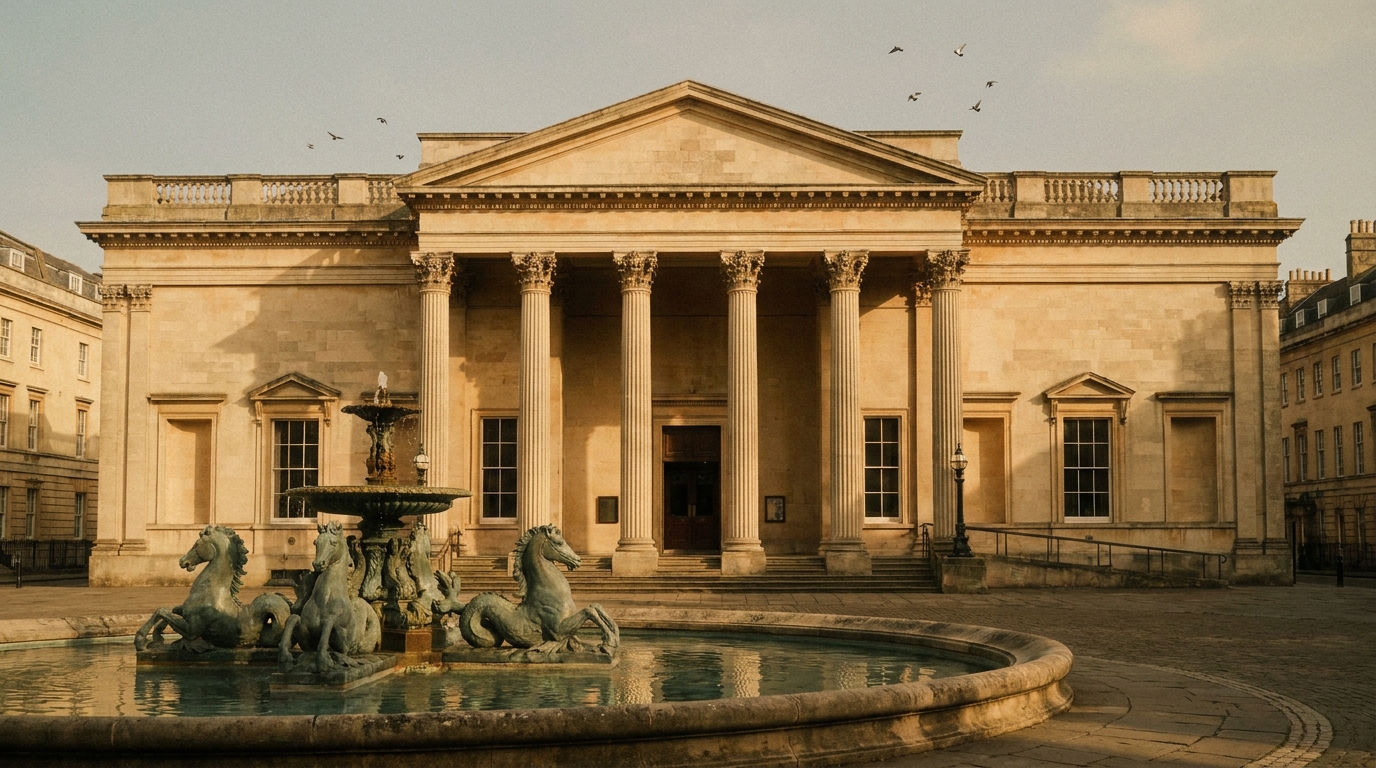
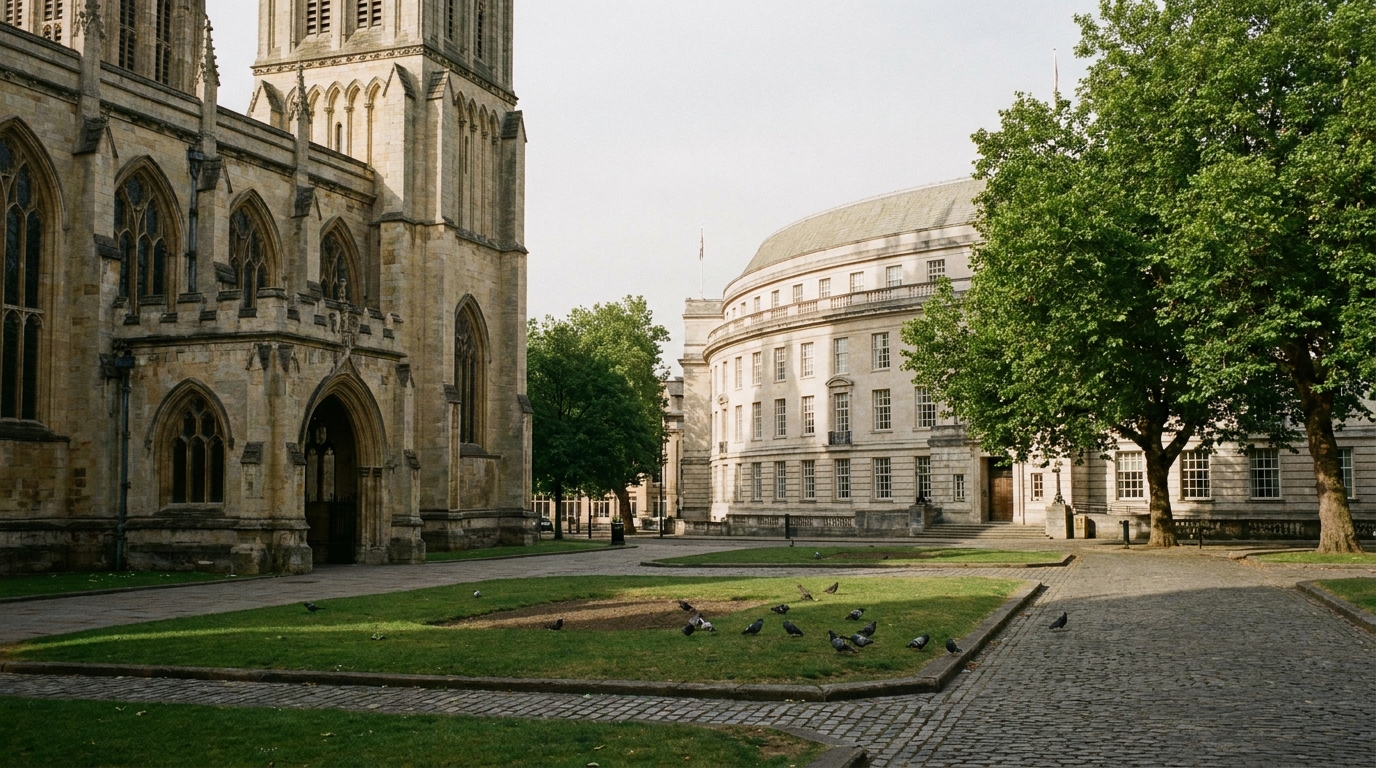
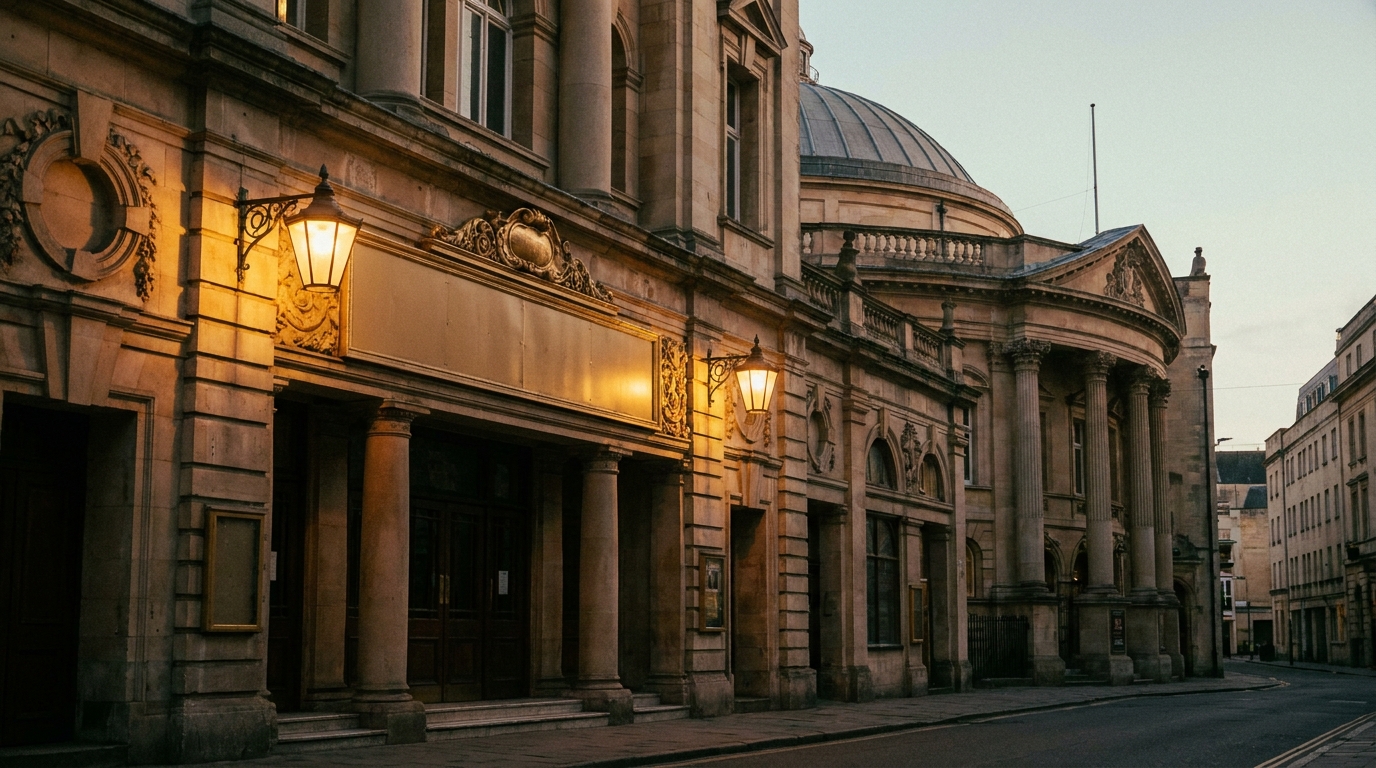
Stop 10 - City Museum and Art Gallery
Stop 10: Bristol City Museum and Art Gallery. Free entry, four floors of Egyptian mummies, dinosaur bones, Banksy, fine art, natural history and the city.
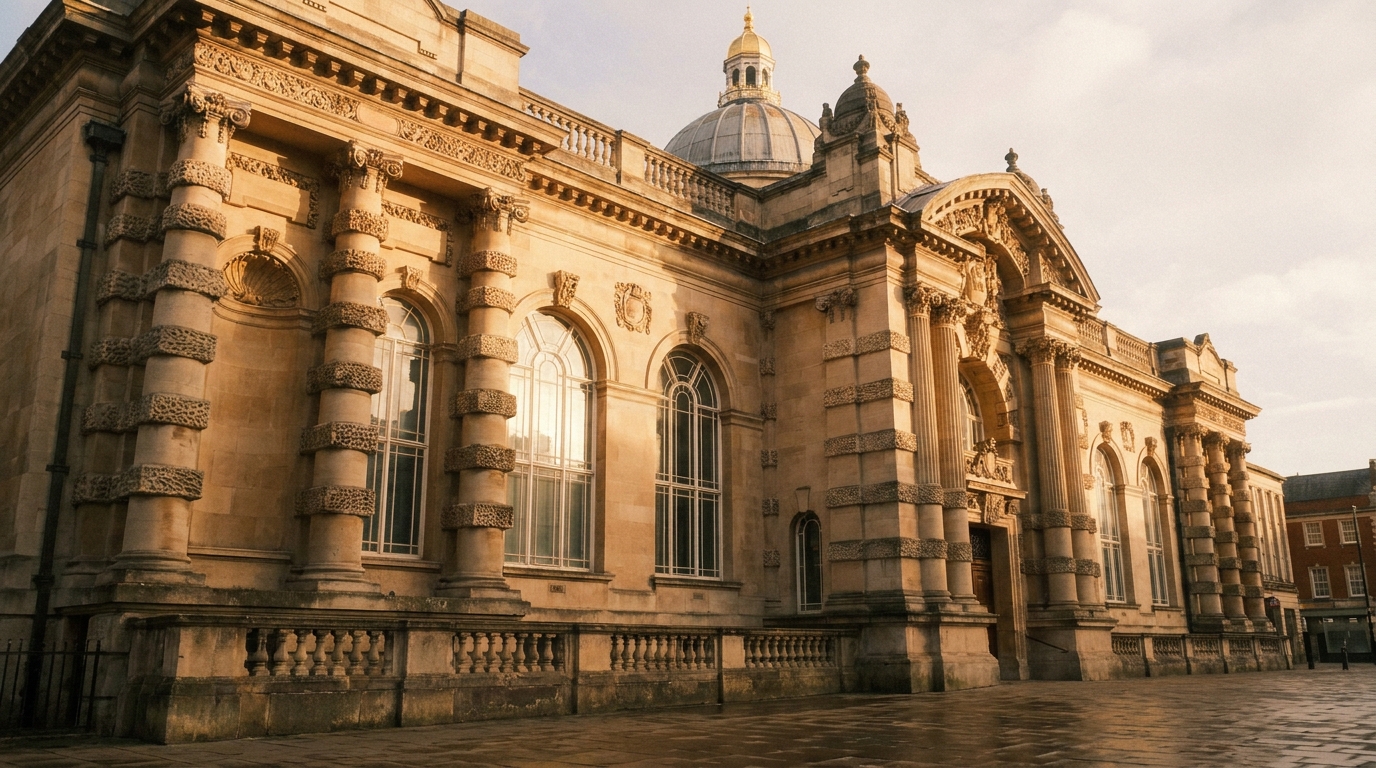
Bristol’s municipal museum is housed in a Baroque Edwardian building at the top of Queens Road - a gift to the city from the tobacco magnate W. D. Wills. Entry is free, the collection is large and genuinely surprising, and the galleries are unusually well laid out for a regional museum.
What to see
Four floors. The ground floor houses the big-draw items: an Egyptian mummy (Horemkenesi, the priest-embalmer), a reconstructed dinosaur skeleton, Banksy’s Paint-Pot Angel, and the glass dome that roofs the central atrium. The first floor is dedicated to fine art - Italian Renaissance panels, a strong nineteenth-century British collection, a small but excellent Impressionist room (Pissarro, Sisley).
The second floor covers Bristol’s own history - from the medieval city through the slave trade, the eighteenth-century merchant age, industrial revolution and into the twentieth century. The section on the transatlantic slave trade is honest and specific; it is not easy viewing.
The third floor is a natural history gallery - minerals, geology, local fauna - and, in a side room, Alfred the Gorilla’s taxidermy.
How long to stay
Two to three hours for a thorough visit. Ninety minutes if you are focused. Families with children enjoy the dinosaur skeleton and the Egyptian mummy most.
Nearby stops
- Stop 09 - Victoria Rooms is one minute’s walk north.
- Stop 11 - College Green and Park Street is four minutes south down Park Street.
- Stop 12 - Bristol Hippodrome is eight minutes south via Park Street.
Practical info
Full lift access to all floors, accessible toilets on ground floor, cloakroom free. The museum cafe on the first floor is decent; a better lunch option is on Park Street. See the City Museum attractions page for more.